Mint and Menthol E-Liquids Shown to Contain Carcinogen
Pulegone is a potential carcinogen found in many mint and menthol e-liquids at levels that exceed FDA safety thresholds. A 2019 study published in JAMA Internal Medicine found that pulegone concentrations in certain e-cigarette liquids were 44 to 1,608 times higher than in menthol cigarettes, raising serious questions about what vapers are actually inhaling.
In 2018, the U.S. Food and Drug Administration banned synthetic pulegone as a food additive because of its carcinogenic potential in animal studies. Yet that ban does not extend to e-cigarette liquids, which remain unregulated for pulegone content. The result is a gap that leaves menthol vapers without clear safety information about one of the most common flavoring categories on the market.
The good news: not all menthol e-liquids contain pulegone. The compound’s presence depends entirely on which mint plant is used as the menthol source. This article explains what pulegone is, where it comes from, which mint sources are free of it, and what to look for when choosing a menthol e-liquid that prioritizes ingredient safety.
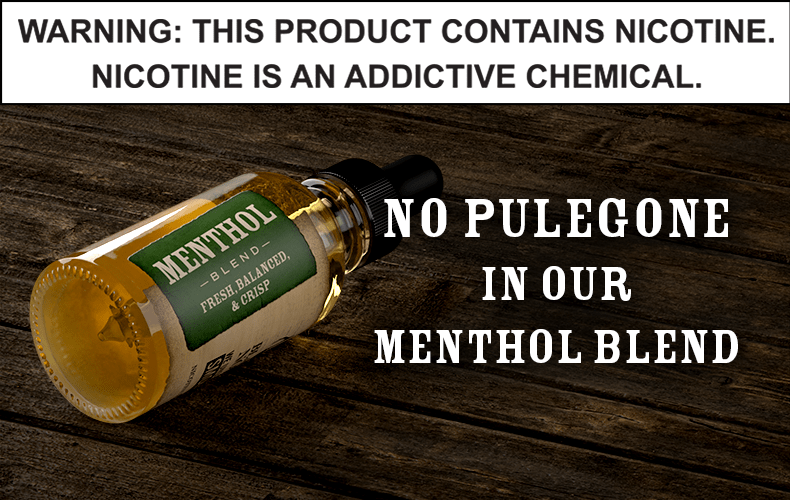
Black Note menthol uses Mentha arvensis, a mint species with zero pulegone, making it one of the few verified pulegone-free menthol e-liquids available.
Black Note
Understanding Pulegone: The Science Behind the Risk
What Is Pulegone?
Pulegone is a naturally occurring organic compound found in the essential oils of several mint plants, including peppermint (Mentha piperita), pennyroyal (Mentha pulegium), and spearmint. It can also be produced synthetically to replicate the cooling, minty flavor profile of these plants. Chemically, pulegone belongs to the monoterpene ketone family and is responsible for much of the characteristic aroma in peppermint oil.
The concern with pulegone centers on its behavior in animal studies. Research has shown that pulegone causes hepatic carcinomas (liver tumors), pulmonary metaplasia (abnormal lung tissue changes), and other neoplasms when administered orally to rodents at high doses. Based on these findings, regulatory agencies classify pulegone as a potential carcinogen with a defined threshold of concern.
The FDA Ban on Synthetic Pulegone
In October 2018, the FDA removed synthetic pulegone from its list of approved food additive substances (21 CFR 172.515), responding to petitions from consumer safety organizations. The decision was based on the margin of exposure (MOE) framework, a standard tool used by the FDA and other regulatory agencies for cancer risk assessment. Under this framework, an MOE value of 10,000 or below indicates that mitigation strategies are needed to reduce potential carcinogenic risk.
The ban applies specifically to synthetic pulegone used as a flavoring agent in food products. It does not cover e-cigarette liquids, smokeless tobacco, or other tobacco products. This regulatory gap means that e-liquid manufacturers are not required to test for, disclose, or limit pulegone content in their menthol and mint flavoring formulations.
The Duke University Research Findings
Researchers Sairam V. Jabba and Sven-Eric Jordt at Duke University published a risk analysis in JAMA Internal Medicine (September 2019) comparing pulegone levels across multiple product categories. Their analysis drew on data from two earlier CDC studies that measured pulegone concentrations in commercially available mint and menthol products in the United States.
The findings were significant:
- Three e-cigarette brands tested (V2, Premium, South Beach Smoke) contained pulegone levels that exceeded the FDA’s threshold of concern.
- One smokeless tobacco brand also exceeded the threshold.
- Menthol cigarettes tested below the threshold of concern, a result researchers attributed to the tobacco industry’s longstanding awareness of pulegone’s risks.
Daily pulegone exposure from vaping these products ranged from 44 to 1,608 times higher than exposure from smoking menthol cigarettes. The researchers noted that the FDA’s risk calculations are based on oral exposure data from animal studies. No toxicity data currently exists for pulegone exposure through inhalation, which toxicologists generally consider a more sensitive exposure route than digestion because lung tissue is more vulnerable to toxic compounds than the digestive tract.
Which Mint Sources Contain Pulegone and Which Do Not
The critical distinction for vapers is not whether a menthol e-liquid is “natural” or “synthetic,” but which specific mint plant provides the menthol. Different mint species contain dramatically different pulegone concentrations:
- Peppermint (Mentha piperita): Contains measurable pulegone. This is one of the most commonly used mint sources in flavoring.
- Pennyroyal (Mentha pulegium): Contains high concentrations of pulegone. The plant’s Latin name actually derives from pulegone.
- Spearmint (Mentha spicata): Contains lower but still present pulegone levels.
- Mentha arvensis (cornmint, Japanese mint): Contains negligible pulegone. This species produces menthol without the associated pulegone risk.
This plant-level distinction is what separates a pulegone-free menthol e-liquid from one that may contain the compound at concerning levels. Most e-liquid labels do not disclose which mint species their menthol is derived from, making it difficult for consumers to evaluate pulegone risk from packaging alone.
How Pulegone Applies to Choosing a Menthol E-Liquid
The menthol source in an e-liquid determines whether it contains pulegone, and most e-liquid labels do not disclose this information. Without explicit ingredient sourcing on the label, vapers are left to trust the manufacturer’s quality standards, or to research brands that voluntarily disclose their menthol origin and testing results.
Ingredient transparency is one of the clearest differentiators between menthol e-liquid brands. Brands that disclose their menthol source, test for pulegone, and publish exclusion lists give vapers verifiable information rather than vague “natural flavor” claims. This level of disclosure is especially important for naturally extracted tobacco e-liquids where the entire value proposition rests on ingredient purity and authenticity.
Black Note Menthol Tobacco E-Liquid uses menthol derived from Mentha arvensis, a mint species that does not contain pulegone. Every batch is tested and confirmed pulegone-free. The menthol is layered onto naturally extracted tobacco produced through Black Note’s N.E.T. (Naturally Extracted Tobacco) cold maceration process, which uses no artificial flavors, sweeteners, or synthetic nicotine.
Beyond pulegone, Black Note menthol products are also tested and confirmed free from diacetyl, acetyl propionyl, acetoin, ethylene glycol, diethylene glycol, and acrolein. This comprehensive exclusion list aligns with the ingredient standards and testing protocols that Black Note applies across its entire product line. For vapers who prioritize knowing exactly what is in their e-liquid, this level of documented ingredient transparency is the most reliable way to confirm pulegone-free status.
Explore Black Note’s pulegone-free Menthol Tobacco E-Liquids
What to Look for When Choosing a Menthol E-Liquid
Choosing a pulegone-free menthol e-liquid requires checking three things: the menthol source, the ingredient disclosure, and third-party testing. Most menthol e-liquids on the market do not provide this information voluntarily, so finding a brand that does is the fastest path to a confident purchasing decision.
Use this checklist when evaluating any menthol or mint e-liquid:
- Check the menthol source. Mentha arvensis (cornmint) produces menthol without pulegone. Peppermint and pennyroyal contain pulegone at levels that may exceed safety thresholds.
- Look for explicit “pulegone-free” labeling or published test results. Vague terms like “natural menthol” do not guarantee pulegone-free status, because peppermint is also natural but contains pulegone.
- Verify additional ingredient exclusions. A manufacturer that tests for pulegone is also likely to test for diacetyl, acetyl propionyl, and other compounds linked to respiratory concerns.
- Check for naturally extracted tobacco (N.E.T.) if you want authentic tobacco flavor with your menthol. N.E.T. e-liquids use a cold maceration process that extracts flavor directly from tobacco leaves rather than using artificial flavoring compounds.
- Avoid e-liquids that list “natural flavors” or “menthol flavoring” without disclosing the specific plant source. This opacity makes it impossible to evaluate pulegone risk.
Common Misconceptions About Pulegone and Menthol E-Liquids
Myth: All menthol e-liquids contain pulegone.
Pulegone content depends entirely on the mint source used to produce the menthol flavoring. E-liquids that use menthol derived from Mentha arvensis contain negligible pulegone. The Duke University study tested specific brands and found high pulegone in some, not all, menthol products. The issue is not menthol itself but the plant it comes from.
Myth: The FDA ban on pulegone covers e-cigarette liquids.
The 2018 FDA action specifically removed synthetic pulegone from the approved food additive list. E-cigarette liquids and smokeless tobacco products are not regulated under the same food additive framework. As the Duke researchers noted, this regulatory gap is one reason pulegone levels in e-liquids can far exceed what the FDA considers acceptable in food.
Myth: “Natural menthol” always means safer.
The term “natural” describes the extraction method, not the safety profile of the source plant. Menthol naturally extracted from pennyroyal is “natural” but contains high pulegone levels. Menthol from Mentha arvensis is also natural but contains negligible pulegone. The relevant question is not “Is it natural?” but “What plant is it from?”
Key Takeaways
When choosing a menthol e-liquid, check the menthol source, look for pulegone-free labeling, and verify ingredient transparency.
Pulegone is a potential carcinogen found in certain mint and menthol e-liquids at levels 44 to 1,608 times higher than in menthol cigarettes (Duke University, JAMA Internal Medicine, 2019).
The FDA banned synthetic pulegone as a food additive in 2018, but that ban does not cover e-cigarette liquids.
The menthol source determines pulegone content. Mentha arvensis produces menthol without pulegone. Peppermint and pennyroyal do not.
Black Note Menthol Tobacco E-Liquid uses Mentha arvensis, is tested and confirmed pulegone-free, and contains no artificial flavors, sweeteners, or synthetic nicotine.
FAQ's
Stay connected with Black Note!
Subscribe to receive exclusive discounts, expert vaping tips, and updates on the latest devices directly to your inbox.