Why Does Vaping Make You Cough? What the Research Shows

Coughing is one of the most commonly reported effects of vaping, and it is most common in the first weeks. In a six-month trial, 1 in 4 people reported a cough in their first week of using an e-cigarette. Research links nicotine, propylene glycol (PG) and, in one large survey, fruit flavors to coughing or to a harsher hit, while several popular fixes have never been tested.
This guide explains what vapor does in your airways, what the research links to coughing, the lung conditions where a cough is a warning sign, what you can adjust, how Black Note e-liquid is made, and when a cough needs a doctor rather than a different e-liquid.
How common is coughing when you vape?
Common, and most common at the start. The clearest data come from the ESTxENDS trial in Switzerland, which gave e-cigarettes to adults who smoked and asked them about symptoms at set points over six months. Cough was one of the three symptoms reported most often, alongside dry mouth and mouth or throat irritation.
| Time point | Reported a cough | People answering |
|---|---|---|
| Week 1 | 25% | 405 |
| Week 2 | 19% | 396 |
| Week 4 | 13% | 386 |
| Week 8 | 14% | 351 |
| Month 6 | 12% | 256 |
The share fell over time, and one of the authors’ models found that drop statistically significant. A second model, which tested whether cough resolved with each extra day of vaping, found no clear effect (odds ratio 1.003, 95% CI 0.996 to 1.009). The authors also caution that people with uncomfortable symptoms may have gone back to cigarettes and left the vaping group, which can make a symptom look as if it fades when it does not.
The fair summary: coughing is common early on and fewer people report it later, but no study has shown how long one person’s cough lasts. Our guide to how long a sore throat from vaping lasts looks at the same trial in more detail.
What vaping does in your airways
Vapor is not water vapor. As Cleveland Clinic puts it, it is an aerosol made by heating a liquid. In a nicotine e-liquid that liquid is mainly propylene glycol (PG), vegetable glycerin (VG), nicotine and flavoring, and the aerosol can also carry ultrafine particles and small amounts of metals.
Your airways are lined with nerve endings that react to irritants, and a cough is the reflex that clears them. Three things are known to act on that system:
- Nicotine. Researchers describe nicotine as having an immediate effect on the nerves that trigger a cough, which is why many first-time users cough on their first few puffs.
- The aerosol itself. Droplets of PG, VG and flavor compounds reach the throat and airways, which is where throat hit and irritation are felt.
- Mucus clearance. In a 2019 laboratory study on human airway cells and sheep, e-cigarette vapor with nicotine dried out the airway surface liquid and made mucus thicker, which slows the way airways clear themselves. The researchers noted they did not test PG, VG or flavors separately, and lab results do not show what happens in every person who vapes.
Cleveland Clinic lists coughing, shortness of breath, a dry or irritated mouth and throat, headaches, eye irritation and nausea among the short-term side effects of vaping. Johns Hopkins notes that research on how vaping affects the lungs is still at an early stage.
What the research links to coughing
Three factors have direct evidence behind them, and none of it is as simple as most vape blogs suggest.
Nicotine
In a 2016 study, 30 healthy adults who had never smoked each took 30 puffs from a nicotine e-cigarette, and most of them coughed while vaping. The authors attributed this to an immediate effect of nicotine on the nerves that trigger a cough. Because the volunteers had never smoked, it shows what nicotine vapor can do in a fresh airway rather than what an experienced vaper should expect.
Nicotine strength also changes how harsh vapor feels. In a 2023 study of 45 people, higher nicotine concentrations and higher device power were each rated harsher, with more throat hit. Harshness is not the same thing as a cough, but it is the closest measure that has been tested across strengths.
Propylene glycol (PG)
PG is one of the two main ingredients in e-liquid, alongside vegetable glycerin (VG). In a 2001 study, 27 volunteers spent one minute in a PG mist during aviation emergency training. Throat symptoms increased, and 4 of the 27 developed an irritative cough. That was theatrical mist rather than vaping, and a 2018 exposure study in healthy adults found no respiratory effects from PG, so the evidence is mixed. Within e-liquids, a 2018 study found 100% PG was rated harsher than VG-heavy blends at the same nicotine strength.
Flavors
A 2024 analysis of the US PATH survey, covering 18,925 adults over several years, found that people currently using fruit-flavored e-cigarettes were more likely to report a dry cough at night than people who did not vape (adjusted risk ratio 1.40, 95% CI 1.01 to 1.94). Menthol and mint users showed no significant difference. The answers were self-reported and the study was observational, so it shows an association, not that fruit flavors cause a cough.
| Factor | What was found | Evidence |
|---|---|---|
| Nicotine | Most first-time users coughed while vaping nicotine; higher strengths rated harsher | 2016 study of 30 non-smokers; 2023 study of 45 users |
| Device power | Higher wattage rated harsher, separately from nicotine | 2023 study of 45 users |
| Propylene glycol | Mist exposure caused cough in 4 of 27 people; another study found no effect; 100% PG rated harshest | 2001 and 2018 exposure studies; 2018 e-liquid study |
| Fruit flavors | Linked to more reports of nighttime dry cough | 2024 analysis of 18,925 US adults |
When a cough is a sign of something more serious
A cough on its own is common when you vape, but a few lung conditions also start with a cough. These are the ones Johns Hopkins, Cleveland Clinic and University of Utah Health describe. For EVALI, the most studied of them, a University of Utah pulmonologist notes that most people who vape do not get it.
| Condition | What it is | Symptoms to watch for | What it has been linked to |
|---|---|---|---|
| EVALI (vaping-associated lung injury) | An inflammatory lung injury that peaked in a 2019 US outbreak | Cough, shortness of breath, chest pain or pain when breathing, sometimes nausea, vomiting, fever or weight loss | Vitamin E acetate, an additive found mostly in THC vaping products; the exact trigger is still not fully known |
| Lipoid pneumonia | Lung inflammation caused by inhaling oily substances | A lasting cough, shortness of breath, coughing up blood or blood-tinged mucus | Oily substances in some vaping liquids |
| Bronchiolitis obliterans (“popcorn lung”) | Scarring of the smallest airways | Coughing, wheezing, chest pain, shortness of breath | Usually diacetyl, a buttery flavoring chemical found in some flavorings |
| Collapsed lung (pneumothorax) | Small air blisters on the lung surface burst and air leaks out | Sudden sharp chest or shoulder pain, shortness of breath | Johns Hopkins notes that smoking and vaping raise the risk |
None of these is diagnosed from a cough alone. If a cough comes with any of the other symptoms in the table, or keeps going, use the checklist in when a cough needs a doctor below and tell your doctor what you vape.
What you can adjust
No study has tested a way to stop a vaping cough. What does exist is evidence on what makes vapor feel harsher, so these are the changes with the most support behind them, roughly in order of evidence.
-
Lower the nicotine strengthHigher concentrations were rated harsher in the 2023 study. If you are moving from a closed pod, our salt nicotine guide suggests a starting strength for each type of device.
-
Turn the power downDevice power raised rated harshness on its own in the same study. On an adjustable device, try the lower end of your coil’s recommended range.
-
Lower the PG shareA 100% PG liquid was rated harsher than VG-heavy blends. If your device can handle a thicker liquid, a higher-VG blend lowers the PG. Small pods are usually made for 50/50 liquids, so check what yours recommends.
-
Consider nicotine salt at higher strengthsIn a 2021 trial of 119 adults at about 24 mg/ml, salt nicotine was rated less harsh than freebase (36.0 against 56.9 on a 100-point scale). That was at a fairly high strength and may not hold at lower ones; our sore throat guide covers a trial at 12 mg/ml.
-
Replace a burnt coilA worn or dry coil gives a harsh, acrid hit. Replace the pod or coil when the taste turns burnt, and let a new one soak for 5 to 10 minutes after filling.
For the full picture on PG, VG and nicotine form, see our sore throat from vaping guide, which sets out each study. For help choosing a strength, read our nicotine strength guide.
How Black Note e-liquid is made
If you are looking more closely at what you vape, it is worth knowing how an e-liquid is made, not just what it tastes like. Here is how ours is made. It describes our process and ingredients. It is not a claim that our e-liquid will stop a cough, or that any vaping is safe.
From seed to bottle in nine steps
-
Seed selectionNon-GMO tobacco seeds, cross-bred a year ahead of planting to select the strongest varieties.
-
GrowingEach variety is grown in conditions suited to it and harvested once fully ripe.
-
Natural curingLeaves are sun-, air-, flue- or fire-cured, depending on the tobacco.
-
Moistening and strippingCured leaves are moistened, stripped and graded. Only the top 50% of leaves move on.
-
Conditioning and agingSelected leaves are dried again, brought to an even moisture level and aged.
-
BlendingLeaves from different growing areas and stalk positions are combined into each blend.
-
Cold macerationThe blended tobacco steeps cold for six to eight weeks, with no heat used to speed it up.
-
MicrofiltrationThe extract is microfiltered to remove impurities before it is blended into the base.
-
BottlingThe finished e-liquid is bottled and packaged. Seed to bottle takes up to three years.
What is in the bottle
Black Note publishes every ingredient. The core list is natural tobacco extract, tobacco-derived nicotine, vegetable glycerin, propylene glycol and purified water. Menthol blends add menthol from mint extract, and salt nicotine versions use a 50/50 VG/PG base. Our Special Blend is also distilled before it is micro-filtered, a step the product page describes as keeping it coil-friendly.
How it compares
| What to check | Black Note | Why it is worth asking |
|---|---|---|
| Where the flavor comes from | Extracted from real tobacco leaves by cold maceration | Most tobacco-flavored e-liquids use a flavoring built to imitate tobacco rather than the leaf itself |
| Nicotine source | Tobacco-derived, from Alchem International in Switzerland, to standards that exceed the EP and USP pharmacopeias. Never synthetic | Labels do not always say whether nicotine is tobacco-derived or synthetic |
| Base ingredients | USP Kosher VG (also FU certified) and USP Kosher PG at 99.7% minimum purity, plus purified water | Pharmacopeia grades set purity standards for each ingredient |
| Sweeteners and added flavors | No sweeteners, no artificial flavors, no colors | Sweeteners caramelize onto coils over time and can cut coil life |
| Refining | Six to eight weeks of cold steeping, then microfiltration | Ask how long the flavor steeps and whether it is filtered; not every brand says |
| Ingredient disclosure | Every ingredient is printed on the label and on our ingredients page | A full, published list means you are never guessing what is in the bottle |
Leaving out sweeteners is also about the coil. Sweeteners caramelize onto a coil over time, so a sweetener-free e-liquid tends to keep the coil cleaner for longer.
For the full process, read naturally extracted tobacco (NET) e-liquid, explained, or see every ingredient and its grade on our ingredients page. For how e-liquid ingredients work in general, see what vape juice is made of.
Common advice we could not support
A lot of what you will read about vape cough is repeated from one retailer blog to the next. These are the claims we looked for evidence on and could not find it.
| The claim | What we found |
|---|---|
| A vape cough clears up in a set number of days or weeks | No study has published a duration. The one trial that modeled it found no clear link between days of vaping and the cough resolving. |
| Coughing after switching is your lungs clearing out | Widely repeated, but we found no study showing it, so we do not make that claim. |
| Mouth-to-lung puffs stop the cough | No human study compares mouth-to-lung and direct-to-lung vaping for coughing. Our MTL vs DTL guide explains how the two styles differ. |
| Changing the airflow fixes it | We found no peer-reviewed human study on airflow and coughing. |
| Drinking more water stops a vape cough | No study tests this for vaping. It may help you feel more comfortable, but it is not a tested fix. |
| A natural or premium e-liquid stops a vape cough | We make naturally extracted e-liquid, and we have not found a study that tests whether any e-liquid brand or type stops a cough, so we do not claim it. |
When a cough needs a doctor
A cough that lasts, gets worse or comes with other symptoms is not something to fix with a different e-liquid. General NHS guidance, which is not specific to vaping, says most coughs clear within three to four weeks and to see a doctor if:
- you have had a cough for more than three to four weeks
- your cough is very bad or quickly getting worse
- you have chest pain
- you are losing weight for no reason
- the side of your neck feels swollen and painful
- you find it hard to breathe
- you have a weakened immune system
See a doctor urgently if you cough up blood. If you are struggling to breathe, call 911.
Johns Hopkins also advises not to dismiss chest or lung pain as normal, and to see a doctor about pain or breathing problems such as shortness of breath or a lasting cough.
Vaping-related lung injury (EVALI)
In 2019 and 2020 the CDC investigated a US outbreak of lung injuries linked to vaping, known as EVALI. Reported symptoms included cough, shortness of breath and chest pain, sometimes with nausea, vomiting, fever or weight loss. The investigation focused on vitamin E acetate, an additive found mostly in THC-containing vaping products, and the CDC advised avoiding THC vaping products from informal sources. If you have these symptoms, see a healthcare provider right away and tell them what you vape.
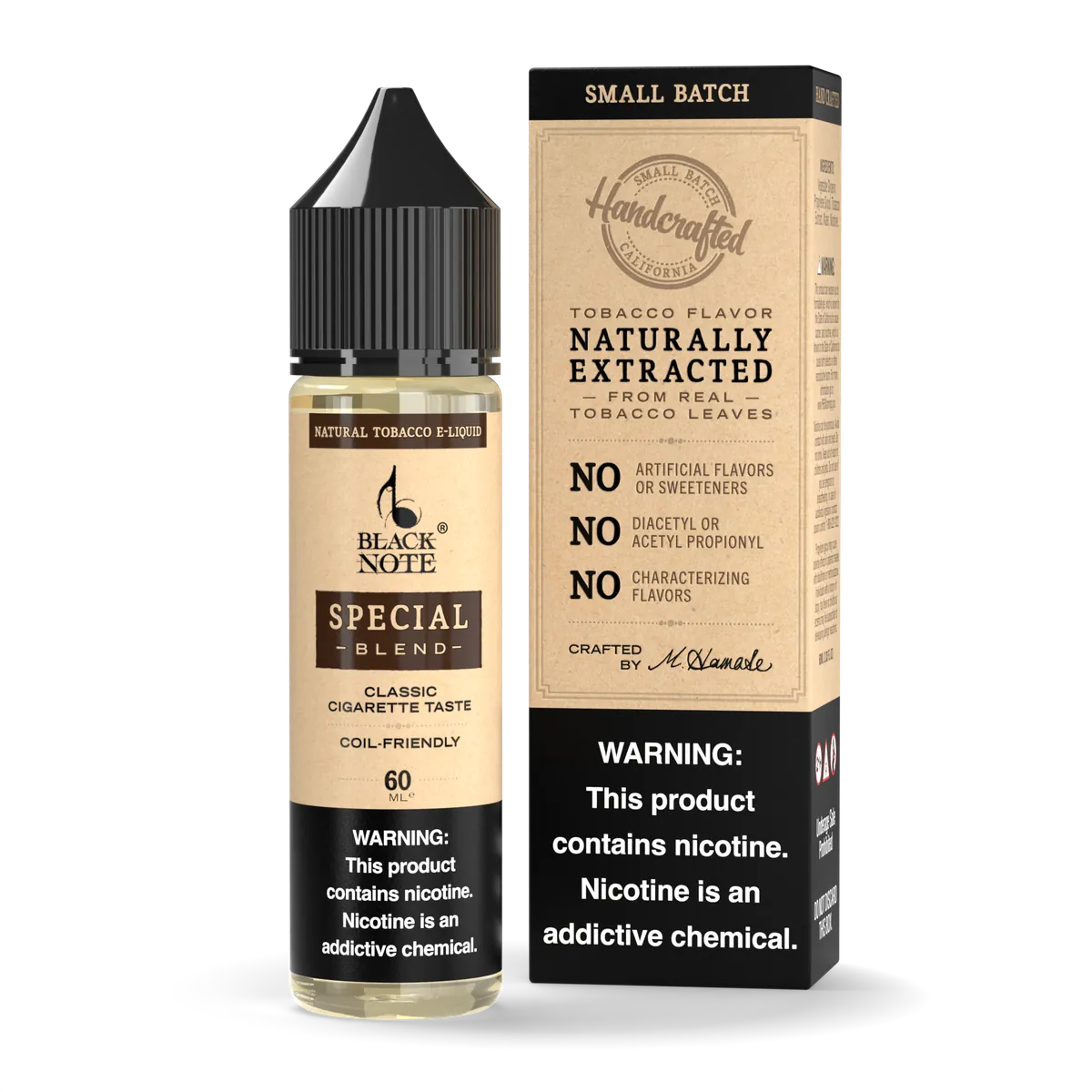
Choose your blend and strength
Every Black Note blend is naturally extracted from real tobacco leaves, with no artificial flavors, no sweeteners and no synthetic nicotine. Choose freebase from nicotine-free to 18 mg/ml, or salt at 20, 30 or 50 mg/ml.
Not sure which strength? Take the Vape Quiz.
Frequently asked questions
Sources
Stay connected with Black Note!
Subscribe to receive exclusive discounts, expert vaping tips, and updates on the latest devices directly to your inbox.